
Author: Simon Baker
Lorem ipsum dolor sit amet, consectetur adipiscing elit. Aenean diam dolor, accumsan sed rutrum vel, dapibus et leo.

Reviewed By: Teddy Lawrence
Lorem ipsum dolor sit amet, consectetur adipiscing elit. Aenean diam dolor, accumsan sed rutrum vel, dapibus et leo.
This information is for general guidance and should not be considered a substitute for professional advice. Always consult qualified professionals—such as ourselves, structural engineers or safety specialists—before making decisions that affect your building’s safety or compliance.” This helps set clear expectations.
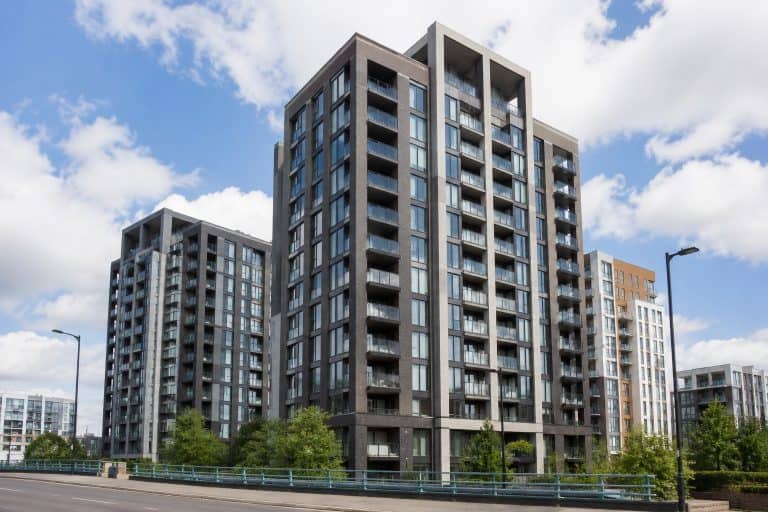
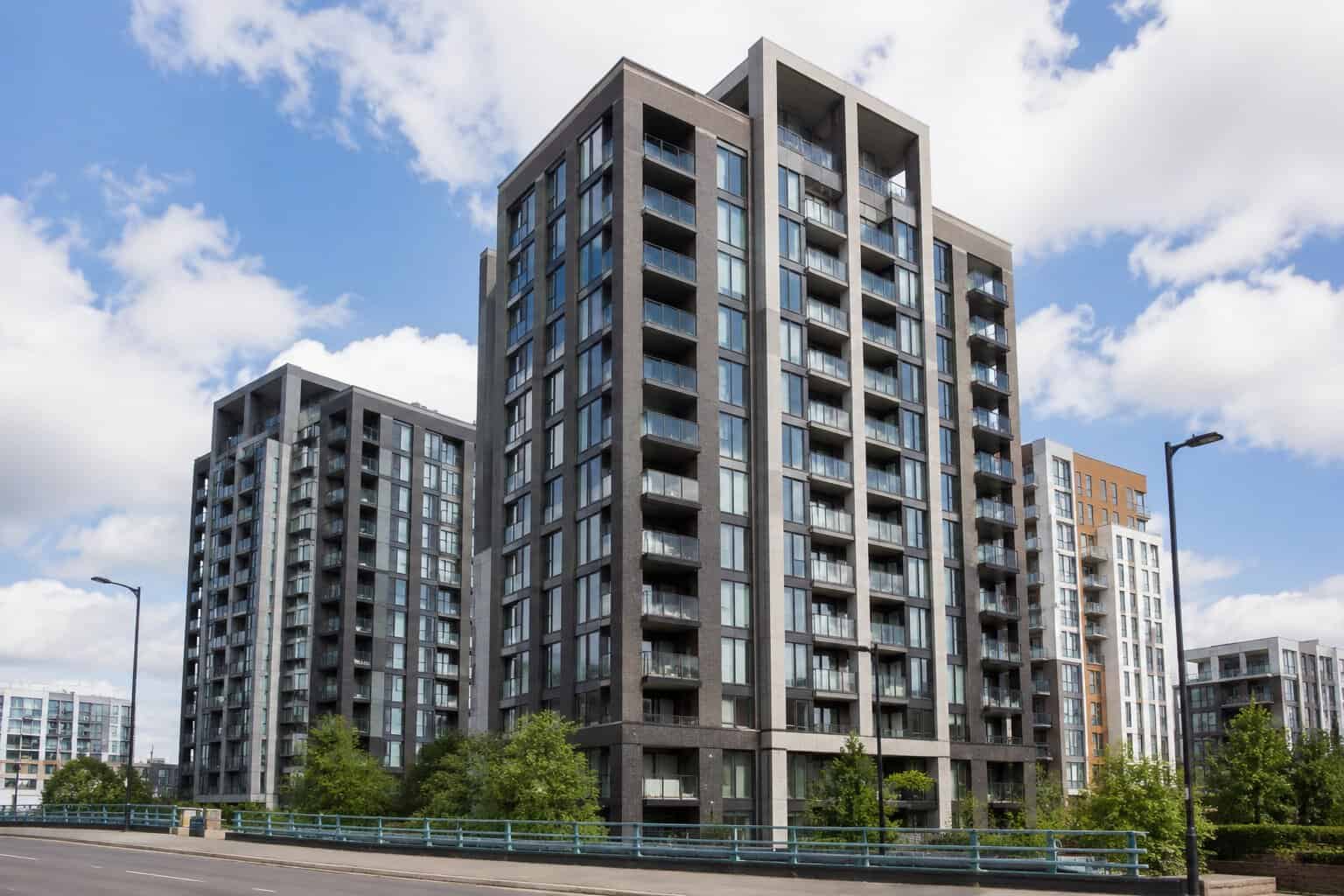
There’s no outright ban on leaseholders having air conditioning in a higher-risk building. But if you live in one — generally a block of 18 metres or more, or at least seven storeys, with two or more flats — you’re likely to face an extra layer of consent on top of the usual lease restrictions. Here’s what actually applies, and what tends to trip people up.
Before anything else, check what your lease itself says about alterations. Most long leases require written consent from the landlord or freeholder for any change to the flat, and many go further, banning any cutting or drilling into external walls outright. That matters for air conditioning because a standard split system — the kind with an indoor unit and an outdoor condenser — needs exactly that: a hole through the wall for the pipework and a fixing point outside.
If your lease has a clause like this, The Leasehold Advisory Service explains that it would block you from creating new wall openings for pipes, and that where written consent is required, you need to get it before starting work — not after. Installing first and asking later is a lease breach regardless of how well the unit itself is fitted.
If your block meets the Higher-Risk Building threshold, there’s a statutory duty-holder you won’t find in an ordinary block of flats: the Accountable Person (and, where there’s more than one, a Principal Accountable Person).
Under Part 4 of the Building Safety Act 2022, GOV.UK guidance confirms this person manages the fire and structural safety risks for the building as a whole — including making sure fire can’t spread between a flat and the rest of the building.
This is relevant to air conditioning for three practical reasons:
An external condenser fixed to, or piped through, the external wall can interact with compartmentation — the fire-resisting walls and floors built to stop a fire spreading from one flat to another — and, in some buildings, with the cladding system itself.
Both are subjects of much closer scrutiny since Grenfell, and an unauthorised penetration is exactly the kind of thing a fire risk assessment is designed to catch.
Your lease will usually carry building safety obligations alongside the standard ones, and GOV.UK’s guidance notes that the Accountable Person can issue a written contravention notice if a resident’s actions create a safety risk. An unapproved wall penetration is a plausible trigger for one.
Finally, the approval route itself is different in these buildings.
For genuinely structural or fire-safety-relevant works, Wildheart Residential Management notes that the Building Safety Regulator — not the local authority’s building control team — is now the statutory authority signing things off.
For most leaseholders weighing up AC, it comes down to which type you’re installing:
A portable unit, vented through an open window with no wall penetration, generally sidesteps all of this — there’s nothing structural to consent to.
A split system with an outdoor condenser is the one that needs proper sign-off: written consent from the landlord or managing agent under your lease, and confirmation that the installation won’t compromise fire compartmentation or the external wall system.
In a higher-risk building, that confirmation may need to come from or via the Accountable Person, not just the freeholder.
It’s also worth asking about electrical capacity before you commit to a unit — some higher-risk buildings manage power supply tightly enough that an added load needs sign-off in its own right.
A flat-out refusal is rare. What’s much more common is a longer approval chain than you’d get in a smaller block: lease consent first, then a fire-safety and structural check, potentially involving the Accountable Person, before any unit goes in. Get everything in writing rather than relying on a verbal nod, and budget time for the process before booking an installer.
This summary reflects the rules as understood at the time of writing. The Building Safety Act 2022’s leaseholder and higher-risk building provisions have been amended more than once since 2022 and may change again — confirm current requirements with your managing agent, the Accountable Person for your building, or a solicitor before relying on this for a specific installation. This is general information, not legal advice.
Short answer: almost certainly not, unless you’re dealing with a tower block. The Building Safety Regulator (BSR) only has jurisdiction over a narrow category of buildings — “higher-risk buildings,” or HRBs — defined by height, storey count, and residential use. Install AC in a house, a shop, a restaurant, or a typical office, and the BSR never enters the picture. Install it in a high-rise residential block, and the answer gets more complicated.
That split is the whole story here, so let’s go through it properly: what the BSR actually covers, when it has nothing to do with your project, and when air conditioning work can trigger real obligations under the Building Safety Act 2022.
People throw around “Building Safety Regulator approval” as though it’s a generic stamp every construction project needs. It isn’t. The BSR was set up under the Building Safety Act 2022, off the back of the Grenfell Tower Inquiry, with a specifically narrow remit: overseeing the design, construction, and management of higher-risk buildings. That’s it. Everything else — which is most buildings in the country — still runs through the building control system that predates the BSR entirely: your local authority, or a registered building control approver.
So there are really two separate questions buried inside “does AC need approval,” and conflating them is where most of the confusion online comes from:
Does this work need any form of building control sign-off?
Is the building in question one the BSR has authority over?
The first question has a separate, ordinary answer that applies everywhere. The second is the one that determines whether the BSR specifically gets involved, and it hinges on a fairly precise legal threshold.
A building falls under BSR jurisdiction if it’s at least 18 metres tall, or has 7 or more storeys, and contains at least two residential units. Hospitals and care homes of qualifying height are also caught for ongoing management purposes, even though they’re carved out of the planning-stage gateway. Height alone doesn’t do it — a 20-storey office block with no flats in it sits outside the definition entirely, because the residential element is what makes the BSR’s involvement statutory.
This is the fact to nail down before anything else. Once you know whether your building clears that bar, everything downstream follows from it.
This covers nearly everything — domestic split systems, small commercial fit-outs, restaurants, shops, low-rise blocks of flats, warehouses. None of it touches the BSR. What it does touch:
Building Regulations, generally. A standard domestic split unit usually doesn’t need formal Building Regs approval on its own, but any electrical work tied to it still has to satisfy Part P, and the system as a whole needs to stack up against Part L on energy performance.
Planning permission, sometimes. This depends on where the outdoor unit sits and how big it is. Conservation areas and listed buildings tighten things considerably, and permitted development limits (commonly around 0.6m³ in volume, kept off pitched roofs and away from road-facing elevations) cover the rest.
F-Gas certification, always. Anyone installing or servicing a system has to hold F-Gas accreditation — non-negotiable, because the refrigerants involved are environmentally regulated.
TM44 inspections, for bigger systems. Commercial setups above 12kW need inspection under the Energy Performance of Buildings Regulations roughly every five years.
None of that is BSR business. It’s the same regulatory furniture that existed long before the Building Safety Act, and it applies regardless of how the Act changed things for high-rises.
Where the BSR Actually Comes In
Two scenarios bring air conditioning under BSR scrutiny, and they work quite differently from each other.
Scenario one: a new HRB under construction. If AC and its plant are part of a building going through Gateway 2, the system has to be in the application submitted to the BSR before a single brick gets laid. Change the scope materially afterward, and you’re back in front of the regulator — the installed system has to match what was approved by the time Gateway 3 and the completion certificate roll around. There’s no quietly upgrading the spec partway through.
Scenario two: retrofitting or altering AC in an HRB that’s already occupied. This is the messier one, because there’s no single rulebook answer — it depends entirely on what the work actually does to the building. Existing HRBs operate under an ongoing change-control regime split into three tiers:
• Major changes need a building control approval application to the BSR before work starts — essentially a scaled-down Gateway 2 aimed at that one piece of work.
• Notifiable changes don’t need approval, but they do need to be reported to the BSR, with a mandatory wait before anyone can start.
• Minor work sits outside both categories and can usually go ahead without either, provided it still meets ordinary building regulations.
Where retrofitted AC lands in that hierarchy comes down to what it interacts with. Ductwork punching through a fire-rated compartment wall is a fundamentally different proposition from swapping an old condenser for a newer, quieter one on a like-for-like basis — the first touches fire safety directly, the second probably doesn’t. The principal accountable person for the building has to work through that classification, typically with a fire engineer or building control specialist in the room, before any tools come out.
A Practical Checklist
If you’re staring down an actual installation and want a straight answer rather than a hedge, here’s the order of operations:
1. Establish the building’s status first. Height, storeys, residential units — that’s the fact that decides which set of rules you’re under.
2. Not an HRB? Treat it as routine: check planning needs with the local authority if the unit sits outside, use an F-Gas certified installer, and get the landlord’s sign-off if you’re a tenant.
3. HRB, still under construction? The AC system needs to sit inside the live Gateway 2 submission, or you need a variation agreed with the BSR before installation proceeds.
4. HRB, already occupied? Talk to the principal accountable person or building safety manager before doing anything. They determine whether the work is major, notifiable, or neither — and that determination has to come first, not as an afterthought.
5. Still unsure? Ask before you start, not after. The BSR has been blunt about treating unauthorised work on HRBs as a serious matter in its own right, separate from whatever safety question the work itself raises.
If you’ve ever spent a hot summer in a top-floor apartment, you’ve probably wondered whether installing air conditioning is an option. For many flat owners and tenants, the balcony seems like the obvious place to put the outdoor unit. After all, there’s usually limited space elsewhere.
The good news is that, in many apartment buildings, an air conditioning condenser can be installed on a balcony. However, the answer isn’t always straightforward. Building regulations, lease agreements, noise considerations, and the design of the balcony itself can all affect whether an installation is permitted.
We’ve spoken to air conditioning installers who regularly work on apartment projects across London, and one of the most common issues they encounter isn’t the installation itself—it’s discovering halfway through the process that the building management company requires approval first.
Most modern air conditioning systems use an indoor unit connected to an outdoor condenser. The outdoor section needs a constant flow of fresh air to operate efficiently, making balconies one of the most practical locations in apartment buildings.
A balcony installation can offer several advantages:
• The unit remains easily accessible for servicing.
• Pipework runs are often shorter, improving efficiency.
• The equipment is kept outside the living space.
• Installation is usually less complex than mounting a condenser on an external wall several storeys above ground level.
Many newer developments are designed with this in mind. It’s not unusual to see dedicated service areas or screened sections of balconies where outdoor units can be positioned without affecting the building’s appearance.
That said, just because there is space available doesn’t necessarily mean permission has been granted.
Before requesting quotations from installers, check the documents relating to your property.
In many apartment blocks, the external appearance of the building is controlled by a management company or freeholder. Even though the balcony may feel like part of your home, alterations to it can sometimes require written consent.
The Leasehold Advisory Service advises leaseholders to review the terms of their lease carefully before making changes that could affect the exterior of the building.
Some developments restrict:
• External equipment visible from the street
• Drilling into structural elements
• Noise-producing mechanical equipment
• Changes to balcony screening or railings
• Condensate drainage arrangements
Obtaining approval before installation is generally far easier than dealing with disputes afterwards.
Architects don’t have to provide free services, but we offer a free initial consultation. This first meeting lets us talk about your project needs. After this chat, you will need to pay for any detailed design or advice.
- Refurbishing a bathroom or kitchen
- Changing internal layouts or door positions
- Installing new flooring or internal joinery
- Making non-structural changes within your flat
- Applying for a Licence to Alter (LTA)