
PAYTE
Extension Architect West London
Principal Designer & Higher Risk Building Expert
Our West London architects have extensive experience in extension architecture, specialising in loft conversions, basement extensions, bespoke extensions, rear extensions, two-storey and single-storey extensions, contemporary designs, double-storey extensions, Mansard roof extensions, and ground-floor extensions.



house extension architect West London

Our firm specialises in house architecture in West London, most commonly Victorian houses. We take pride in helping our clients enhance their property value while optimising space. We create bespoke designs and contemporary design extensions with interior reconfigurations to maximise natural light and extra space. Our creative design team elevates the planning process to a new level.
As a leading architectural practice, we specialise in helping homeowners navigate the planning process, building regulations, planning permissions, party walls, and building control. Our experienced team handles all regulatory challenges in extension projects, making your home’s transformation seamless and stress-free.
We carry out architectural work for rear, wraparound, side return, or infill extensions to best suit your space and increase its value. We begin with our design process, initial drawings, structural calculations, and 3D visualisations to assist clients in envisioning the transformation, alongside a precise scope of work for the building contractor.
Our expertise ensures that each project is expertly designed to meet your specific needs.
Choosing an experienced extension architect London clients can trust ensures your project progresses with clarity, technical confidence, and a well-structured path from concept to construction.
apartment architects West London

We specialise in providing comprehensive design and architectural services for apartment extensions in West London. Our offerings include detailed planning advice, design layout changes, custom joinery, and regulatory drawing preparations.
Whether you are looking to completely revamp your apartment’s layout or to implement specific modifications, we manage every aspect of the project.
Our services encompass the entire process, from securing planning permission and building approvals to obtaining landlord consents and the necessary license to alter documentation. We also handle all planning applications ourselves.
Unlike many architect firms, we offer a fully integrated service that combines design, planning, and project coordination under one roof.
extension conversion package
3 Meter rear extensions package
From £60,000.00 INC. VAT
What’s included:
6 Meter rear extensions package
From £104,700.00 INC. VAT
What’s included:
At Payte Architects London, our rear extension service is about making it simple to gain more space without losing control of cost or complexity. With over 10 years’ experience on West London homes, we offer two fixed‑price packages at three and six metres (including VAT), so you choose how far to extend and we handle design, approvals and on‑site work up to first fix.
You’ll work with a friendly architectural team that actually picks up the phone. All architectural work is carried out by architects registered with the Architects Registration Board (ARB) or chartered with the Royal Institute of British Architects (RIBA), and we coordinate closely with our dedicated extension build team so design and construction stay joined‑up from day one.
We take care of the planning route – from Lawful Development Certificates for three‑metre projects to prior‑approval applications for six‑metre schemes – using our experience with boroughs such as Haringey Council’s planning team, Lambeth Council’s planning service and Brent Council planning to shape proposals around what local councils typically support.
Throughout, we keep communication simple and regular so you always know where your project is and what’s coming next, aiming for a bright, well‑built West London extension that quickly becomes the main room everyone uses.
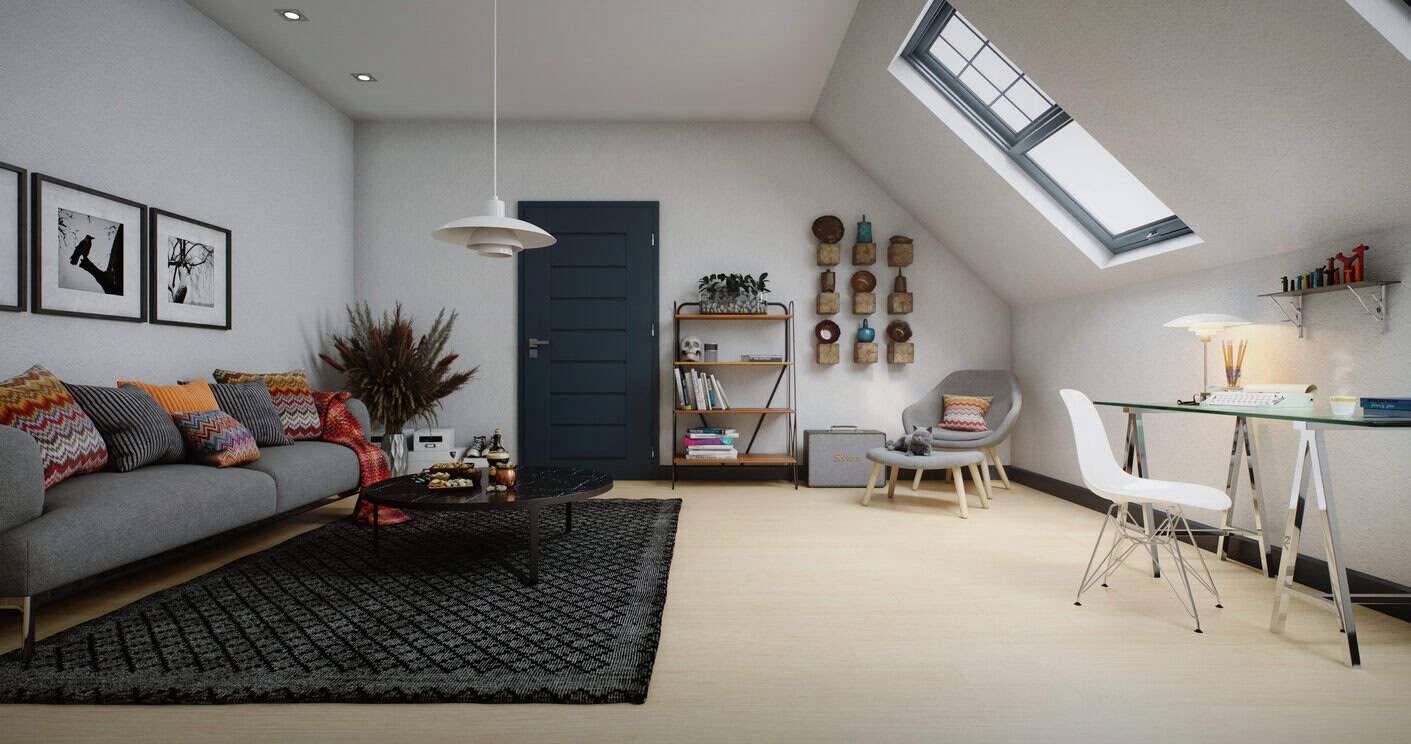
Exclusions
This package is not applicable to property where you need planning permission or listed building consent, or if there is an article 4 on your property.
In addition to the above, the following exclusion applies:
- Party wall award
- Building control fees
- Any specialist consultants
- Asbestos removal fees
- Finishing (sanitary ware, tiling, floor finishing, wall finishing, joinery).
- Party wall award
- Building control fees
- Any specialist consultants
- Asbestos removal fees
- Finishing (sanitary ware, tiling, floor finishing, wall finishing, joinery).
ARRANGE A FREE CONSULTATION
Arrange a free consultation with one of our ARB or RIBA extension architects today. We offer clients a complimentary 30-minute consultation.
FREE NO OBLIGATION CONSULTATION
VIRTUAL CONSULTATION AVAILABLE
ON SITE CONSULTATION AVAILABLE
Innovative West London Extensions Crafted with Exceptional Architecture
Our West London architects create smart, sustainable extensions that suit your space perfectly.
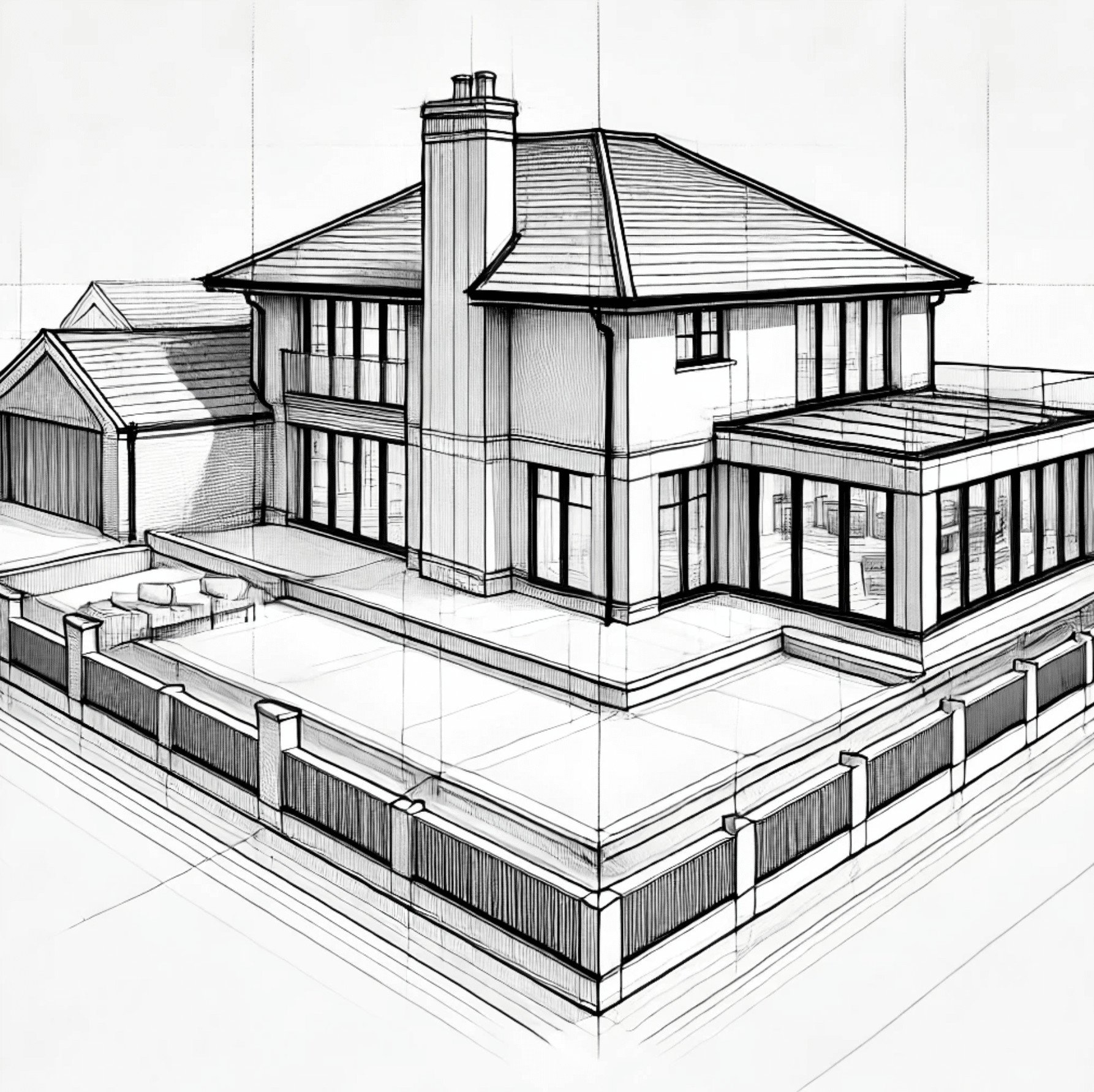
Wraparound
We specialise in wrap-around extensions. This is a popular way to expand and transform properties. This extension combines a rear and side addition. It creates an L-shape that expands ground-floor space. This is ideal for open-plan kitchens, living spaces, or adaptable rooms that fit modern lifestyles. We handle everything from design and planning permission to construction.
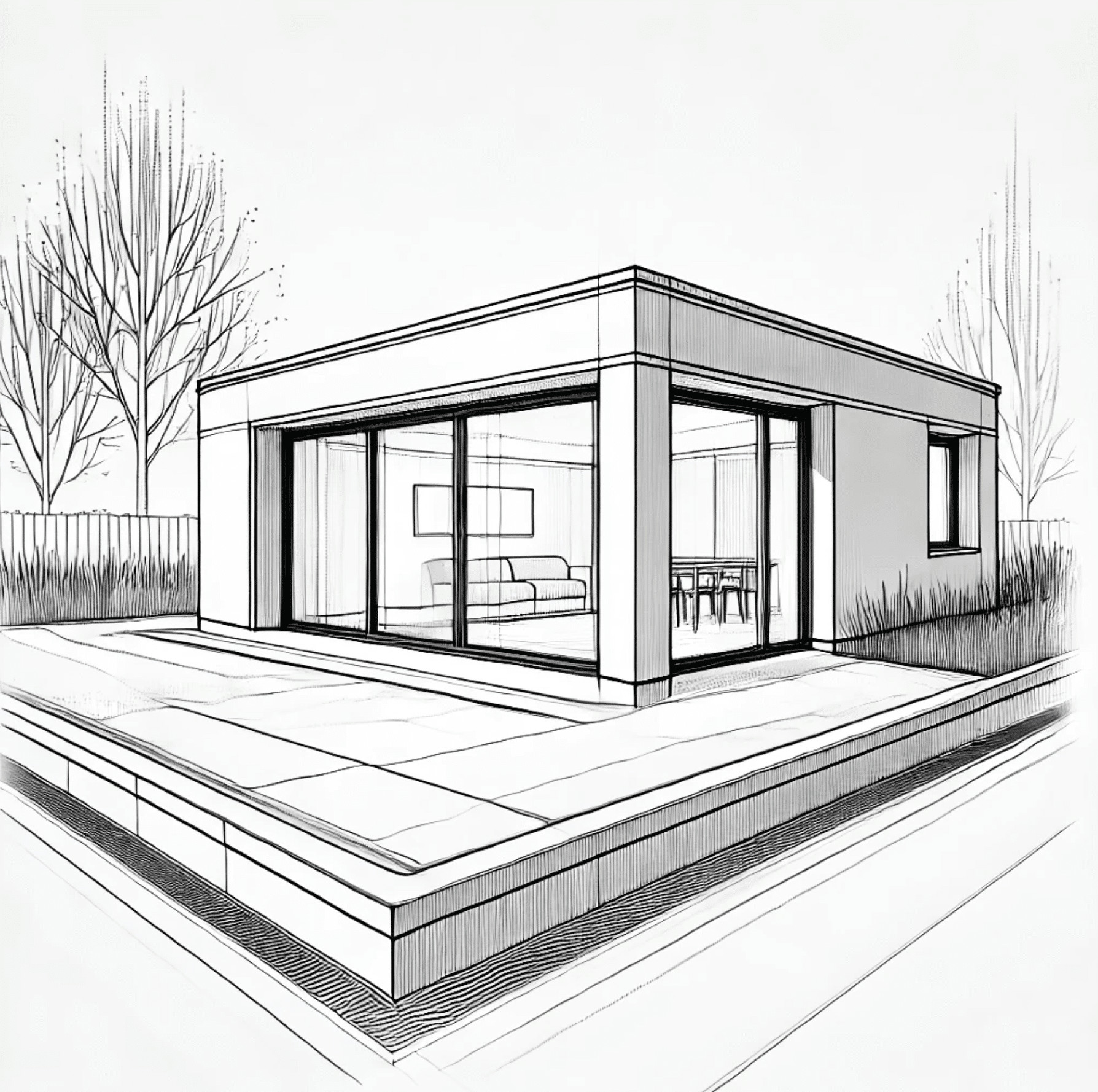
Single Storey
A single-storey extension can really boost space in your West London property. It can be added to the back or side of the property. This addition offers more space for a modern kitchen, a living area, or a home office. This extension improves the flow inside and makes the property more practical. Our architectural team makes it easy for you to get great results that suit your property.
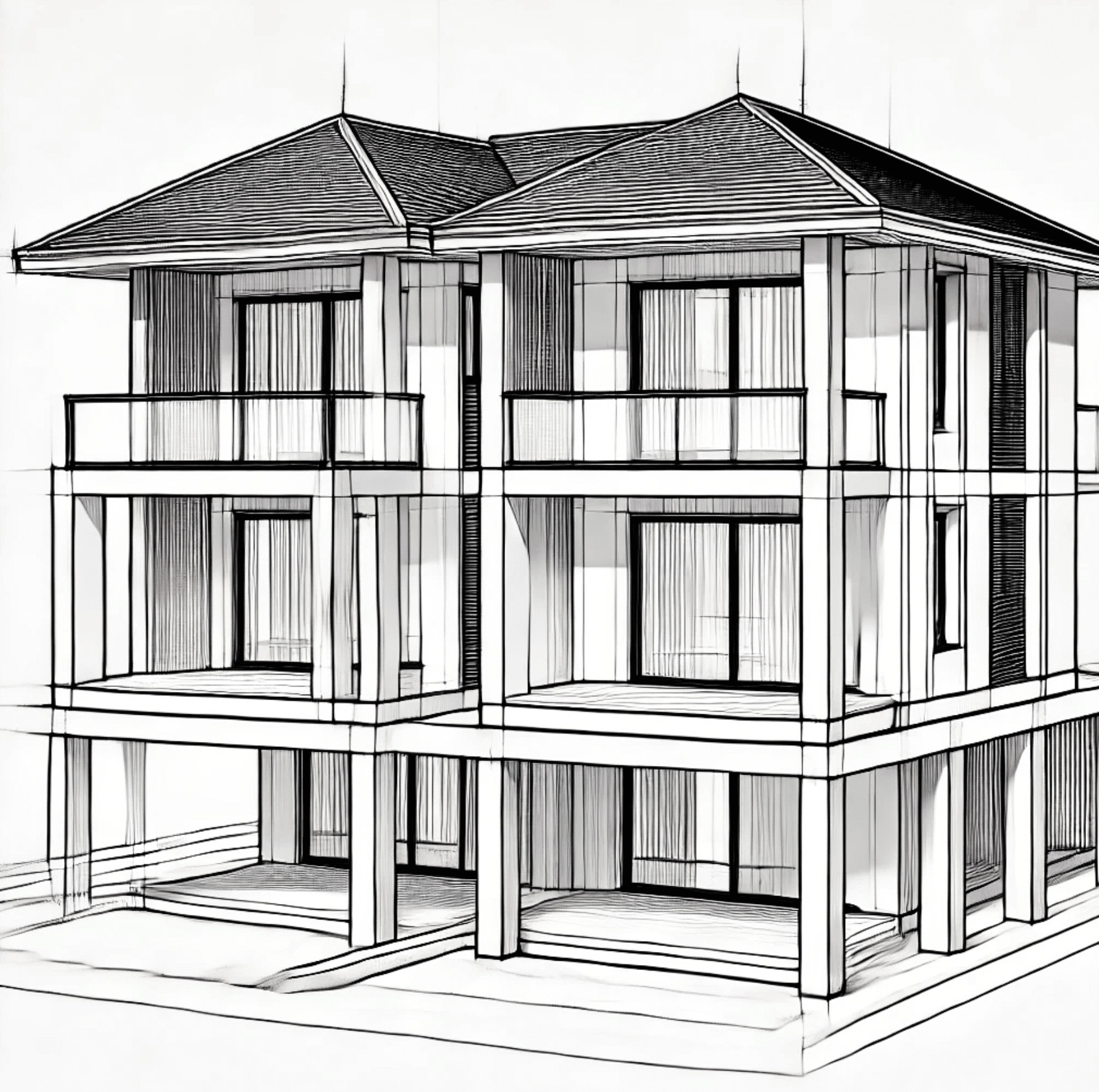
Multi Storey
A multi-storey extension in West London can provide a lot of space. You can use it for extra bedrooms, bigger living areas, or more bathrooms. Building up on your property lets you make the most of it without losing any garden space. We take care of everything. This includes planning, permissions, and construction. We ensure your extension fits well with the current architecture.
Side Return
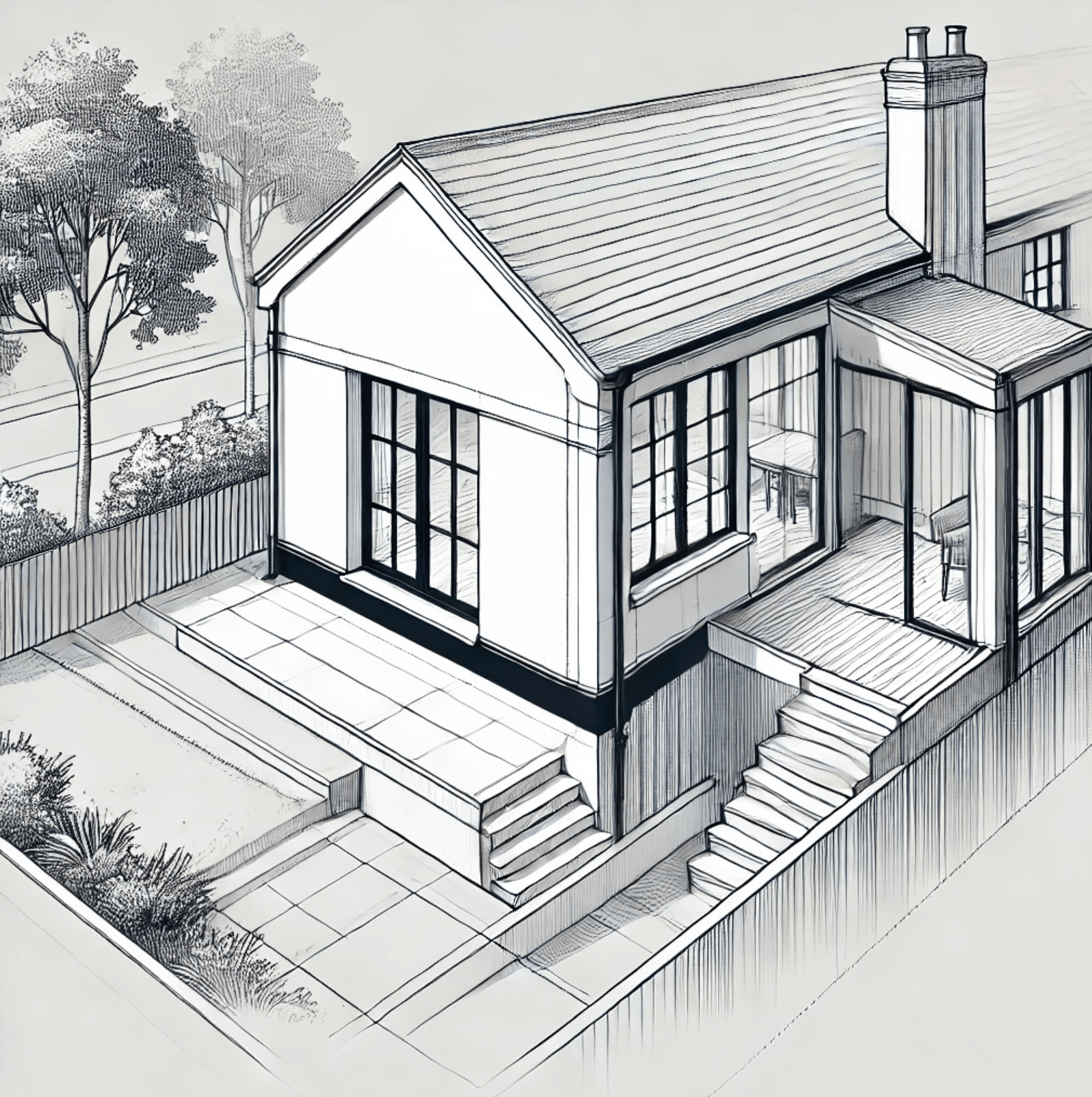
A side return extension utilises the unused space beside your home. You often find this addon in Victorian and Edwardian buildings in West London. Clients can extend into this narrow area to make a wider, open-plan kitchen. This change will let in more natural light. Our architects are experts in side return extensions. These designs boost functionality and add to the property’s value.
Rear Extension
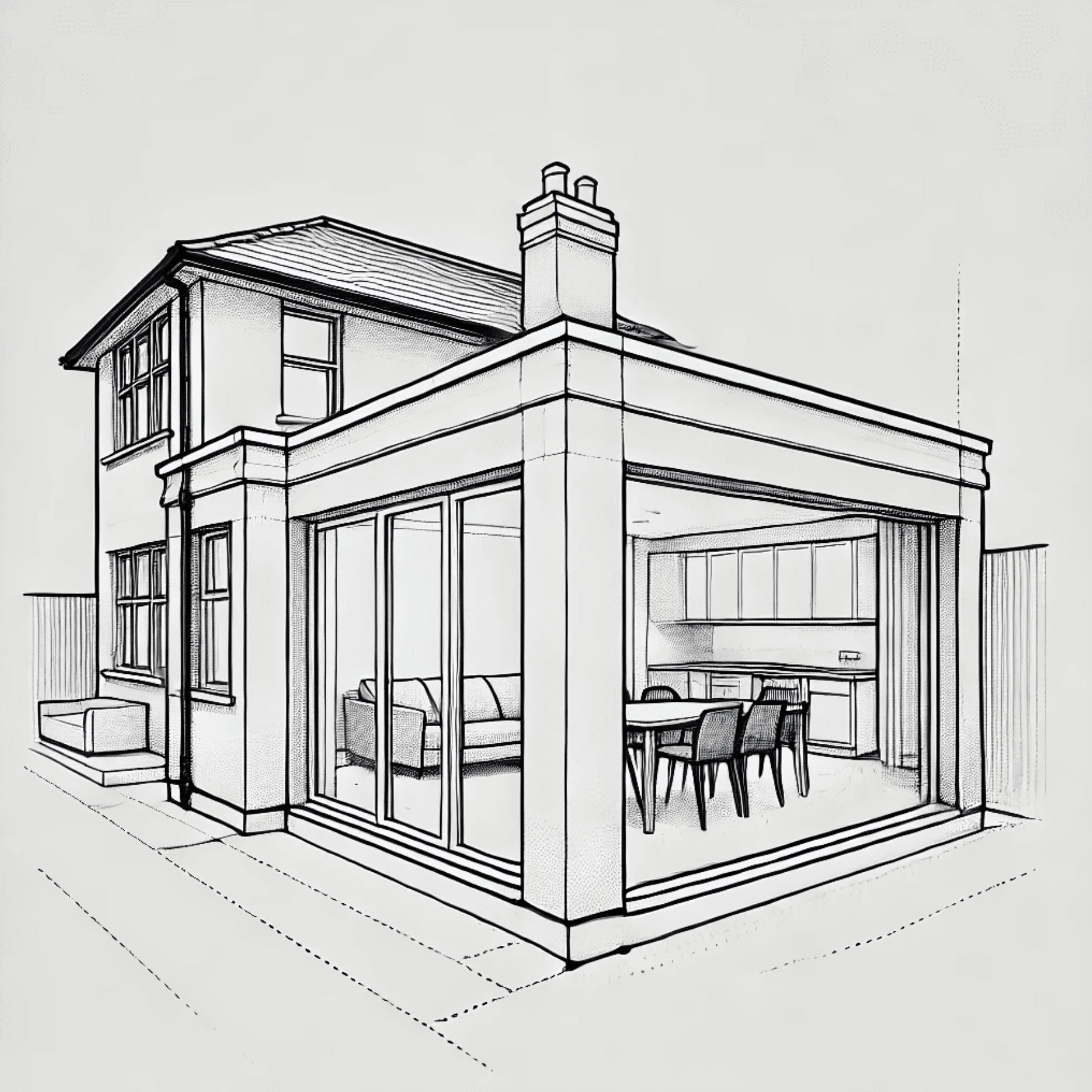
A rear extension expands the back of your property. This gives you room for an open-plan kitchen, a larger dining area, or a more spacious living room. This is ideal for clients looking to improve their ground floor. These extensions boost natural light and link indoor and outdoor spaces smoothly. We create rear extensions that match your home’s style. They also boost efficiency and value.
Seamless Home Extensions from Concept to Completion
Our team of architects, designers, and builders in West London creates stylish and practical home extensions. We handle each stage, from the first meeting to the final build, with care and precision.
Free Initial Consultation
In your 30-minute free consultation, we’ll discuss your project vision, design choices, size, and budget for the extension. This process ensures that we can align your ideas with the practical aspects of the project with accuracy.
Full Architecture Service
We offer bespoke services for home extensions. This features on-site assessments, detailed drawings, 3D visualisations, planning applications, and tender management. We customise each service to meet your unique needs.
Planning & Permissions
Our West London architects focus on extension planning. Our professional practice handles it all, from the initial idea to final approval. We carefully find ways to handle local rules, stay within zoning laws, and meet building codes.
Complete Building Works
We’re a full-service architecture firm that specialises in extensions. We have in-house architects, interior designers, and building contractors. Our team ensure easy collaboration, guiding your project till its delivery.
Local Topic
General information only. Planning and licensing rules change and depend on the individual property. This article is not legal or professional advice.
WEST LONDON — WHERE THE EXTENSION MEETS THE HOUSE: JUNCTIONS, DPCS AND MOVEMENT (DOC C)
Ask a builder where extensions go wrong and he’ll point at the middle of the new room. Ask a surveyor five years later and she’ll point somewhere else entirely: the line where new work meets old.
That line is the whole game. We’ve inspected West London extensions with £80,000 kitchens and a damp stripe climbing the junction wall, because somebody treated the joint as a formality.
Two buildings pretending to be one
An extension is a new building leaning against an old one, and the two disagree about almost everything.
The old house finished settling before the Great War. The new work will shrink, dry and bed in for its first two years.
The old wall may have no damp-proof course worth the name; the new one has a designed DPC that has to connect to something.
Approved Document C governs the moisture side, and the junction is where it earns its keep.
Cavity trays where the new roof meets the old wall — the detail most often missed, and the source of that climbing stripe.
DPC levels married across the joint, not assumed. Old airbricks kept breathing, because burying the Victorian floor’s ventilation under a new slab is how you buy dry rot for a house that never had it.
The Property Care Association sees the aftermath of these mistakes weekly; its guidance is worth a read before anyone prices anything.
Let the joint move
Then movement. New masonry bonded rigidly to old masonry will crack — not might, will — as the fresh work shrinks against fabric that stopped moving a century ago.
So the junction gets designed to flex: a proper movement joint with sealant, or details that accept a hairline where it can’t be seen, wall ties that slide rather than fight.
NHBC’s standards set out the conventions, and the Brick Development Association covers the masonry specifics well.
None of this shows in the estate agent photographs. All of it decides whether the extension is still watertight when those photographs get taken again for the next sale.
A closing habit worth stealing from us: on every extension we draw, the junction gets its own large-scale detail — not a note saying “builder to ensure,” an actual drawing, checked by building control with everything else.
The glossy end of the project will look after itself. Draw the joint. That’s where the building is actually happening.
West London Home Extension Planning, Design, and Construction
Feasibility Studies for Home Extensions
Our West London property extension architects carry out comprehensive feasibility studies. They look at structural integrity, space potential, and costs. This ensures that property expansions are smart and efficient.
Planning Permission for Extensions
Our team of architects collaborates with local councils. We navigate planning policies, building codes, and zoning laws to ensure smooth compliance. Our expertise simplifies the process, providing a stress-free experience.
Project Management and Contractor Coordination
We monitor construction progress, project timelines, and project quality. This way, we ensure everything operates without issues and according to schedule. We focus on details to ensure everything runs smoothly from start to finish.
Sustainable Extension Materials & Energy Efficiency
Our eco-friendly extension designs and insulation solutions improve property energy efficiency, sustainability, and comfort. Our approach reduces environmental impact and improves thermal performance.
Structural Engineering and Load-Bearing Analysis
We check that extensions meet safety, stability, and regulatory standards. We do this with structural assessments and compliance checks. Our team makes sure that a property extension blends in well, is safe, strong, and built to endure.
Interior To Exterior Extension Flow and Aesthetic Integration
Our architects mix new extensions with the current style. This creates a smooth transition between the old and the new. Our architects respect the original structure while enhancing functionality, aesthetics, and flow.
why work with us?
Fast Turn Around
Our team of extension experts completes projects quickly. We use smart planning, a skilled team, and clear project management goals. This makes the process smooth and fast.
Fixed Pricing
We offer clear, fixed pricing for architectural and building services for extensions. This helps clients understand the costs better. This approach allows for confident budgeting.
We Maximise Value
We help clients get the best results for extensions. We balance investment benefits with a comfortable living space. Our expert advice ensures maximum financial value.
Turnkey Operation
A complete solution for West London extensions, interior design, and construction. Our clients relax while we manage the project. From concept and planning to interior detailing and build.
recent EXTENSION projects
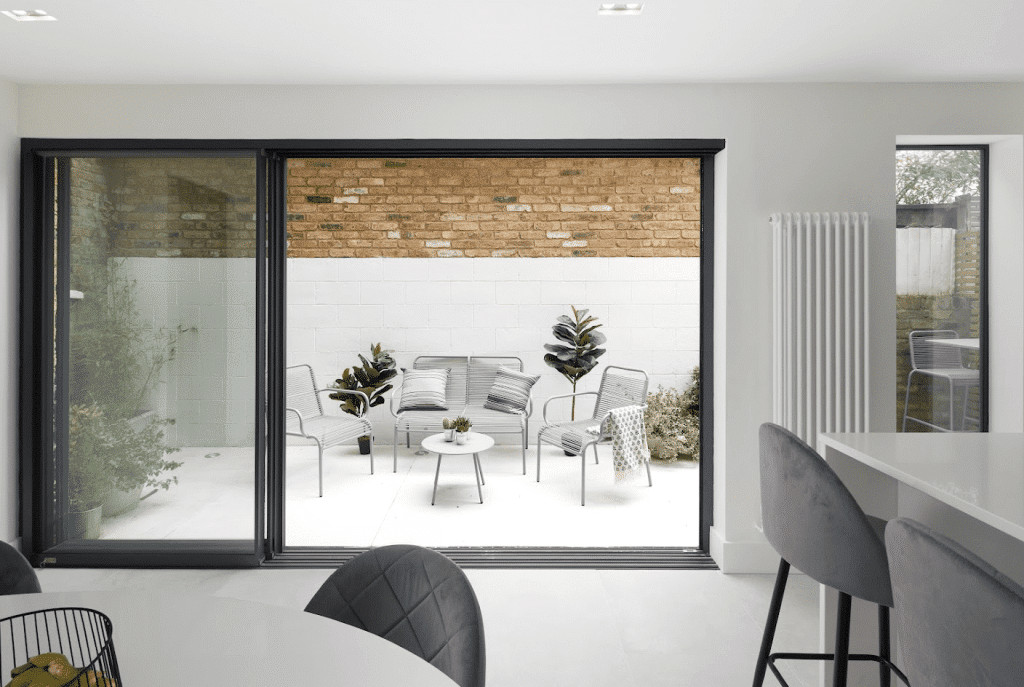
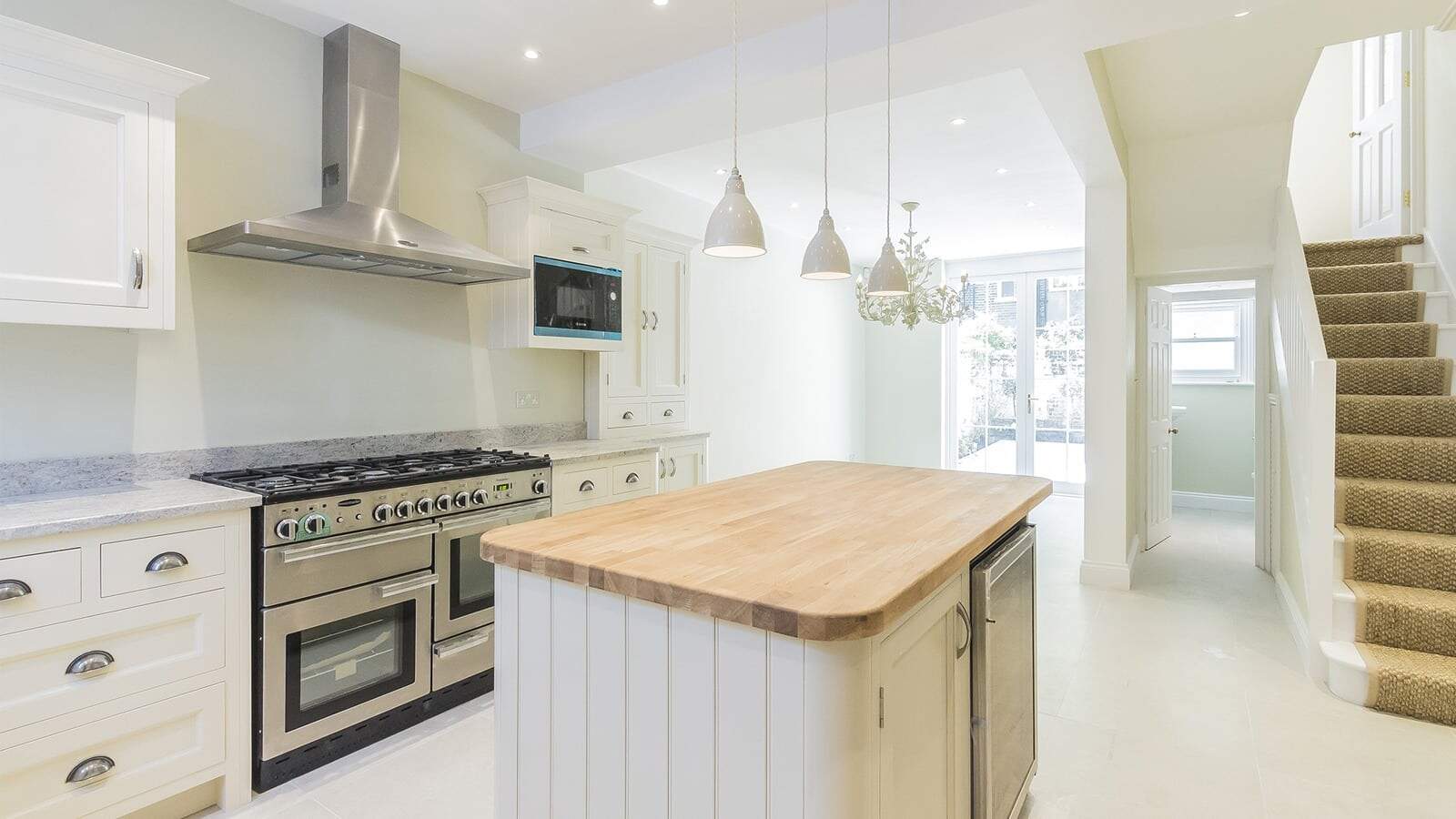
Local Topic
General information only. Planning and licensing rules change and depend on the individual property. This article is not legal or professional advice.
WEST LONDON — NEW EXTENSION, FIRST CRACKS: SETTLEMENT AND MOVEMENT IN FRESH ADDITIONS (DOC A; NHBC)
The call usually comes in month eight. “There’s a crack over the new doors. Should we be worried?”
Nine times out of ten: no. But the tenth call matters, so this piece is about telling them apart — because a new West London extension will almost certainly crack somewhere in its first two years, and nobody warns people.
Why new work moves
Fresh construction is wet. The concrete, the mortar, the plaster, the screed — tonnes of water went in, and it all has to leave. As it does, materials shrink.
Timber joists dry and deflect a few millimetres. The new foundations take up their load and bed into London’s clay.
Meanwhile the old house does none of this, because it finished its settling generations ago.
The result is hairlines. At plasterboard joints. Where new plaster meets old.
Over big openings, radiating from corners of doors and windows. NHBC, which warranties most of Britain’s new homes, treats fine shrinkage cracking as expected behaviour, not defect. Decoration’s problem, not structure’s.
The BRE publishes the classic guidance on assessing crack damage, and its scale starts at categories you can fill with paint.
The cracks that earn a phone call
Different story if the crack is stepped through brickwork rather than running through plaster. Or — as a deliberately cautious rule of thumb — wider than a pound coin is thick, and growing. Or matched by doors that suddenly bind, floors that tilt, or a gap opening where extension pulls away from house.
Those patterns can mean the foundations are moving rather than the finishes — and foundation behaviour is Approved Document A ground, designed by an engineer against the ground conditions, not judged by eye from a kitchen stool.
West London’s clay makes the distinction sharper: clay swells and shrinks with the seasons, and a hot dry summer will print itself on shallow foundations.
If a crack has you genuinely uncertain, a RICS surveyor’s assessment costs a few hundred pounds and settles the question with instruments instead of anxiety.
The design lesson sits upstream of all this. Extensions we detail get movement designed in — beads and joints where new meets old, so the inevitable hairline happens along a straight, discreet line instead of wandering across your new wall.
And clients get told, at handover, in writing: it will crack a little, here and here, and that’s the building drying out, not letting you down.
Month eight goes better when month one included that conversation.
FAQ
Services
We offer a comprehensive suite of architectural services for West London, our skilled architects each specialise in distinct disciplines. This diversity allows us to tailor our approach to meet the various facets of architectural design.