
listed building architects London
Principal Designer & Higher Risk Building Expert
London’s listed buildings carry history in their walls. Not in an abstract way — in timber beams, in uneven brickwork, in staircases worn by centuries of use. These homes require judgement as much as creativity. At Payte Architects London, we approach them with respect first, design second.





specialised Listed Building Architect firm
Working with listed buildings is rarely straightforward. It was never meant to be.
Once a property is listed, every intervention carries consequence. Structural adjustments, material changes, even internal reconfiguration must be carefully justified — not stylistically, but historically.
Across London we have delivered projects involving Grade I, Grade II* and Grade II listed buildings. Many are the historic residential types that define the city’s heritage, including Georgian townhouses, Victorian terraces, Edwardian villas and traditional mews houses. Our work spans boroughs such as Westminster, Kensington & Chelsea, Camden and Marylebone, where listed building planning requirements are particularly rigorous.
We have also worked within some of London’s most distinguished estates, including the Grosvenor Estate and the Howard de Walden Estate, where heritage protection and planning scrutiny are exceptionally high.
Planning authorities expect rigour. So do we. Listed building consent applications require clarity and a clear understanding of architectural significance. As a specialised London architect practice, we regularly deal with the common issues that arise in listed building planning applications — from heritage justification and conservation materials to negotiations with conservation officers.
With combined decades of experience working with listed buildings across London, we understand how conservation policy, borough planning departments and architectural judgement intersect in practice.
A listed façade is never isolated. It forms part of a wider composition — the street, the rhythm and proportion of neighbouring buildings. Change one element carelessly and the imbalance shows.
Whether restoring historic detailing or introducing discreet contemporary interventions, our aim is always the same: to ensure London’s listed buildings continue to evolve without losing their architectural integrity.
a comprehensive listed building architect
The role of a listed building architect is part technical, part strategic and part instinctive — particularly in London, where conservation areas often overlap with ambitious residential briefs.
We begin quietly. Measured surveys. Archive research where possible. Time spent understanding the structure before proposing anything new.
As a London architect practice operating across architecture, interior design and build, we guide listed building projects from concept to construction. Our architects work closely with an in-house design and build team, ensuring a seamless process when working on listed buildings.
Adaptation is rarely about bold gestures. It is about refinement — improving flow, introducing light without disturbing character and upgrading services without compromising historic fabric.
Our lead architect, Teddy L, brings over a decade of experience working with listed buildings in London, informing the careful judgement required when balancing heritage protection with modern living.
Our architects have delivered listed building projects in Chelsea, Mayfair and Kensington, as well as across many London neighbourhoods where heritage remains central.
Sometimes the solution is structural.
Sometimes restorative. Both require judgement and patience. Historic buildings are unforgiving when rushed.
the right architect for a listed building
Appointing an architect for a listed building project should feel deliberate. These are not properties that tolerate improvisation.
Listed building consent and conservation consent exist to protect what cannot be replaced. Applications must be coherent, drawings precise, and the design narrative grounded in the building’s heritage significance.
Securing planning approval for listed buildings in London can be demanding. Boroughs such as Westminster, Kensington & Chelsea and Camden are known for rigorous conservation review.
This is where experience matters. Our lead architect, Teddy L, has over a decade of experience working on listed buildings across London’s most prestigious locations, regularly dealing with conservation officers and planning authorities — including projects associated with the Crown Estate.
Experience across London boroughs shapes how proposals are developed. Subtle adjustments in proportion, detailing or materials can determine whether a listed building consent progresses smoothly or faces delays.
Over the years we have secured listed building consents for projects across London, including properties on Gloucester Gardens and York Terrace, alongside many other historic buildings throughout the capital.
The risk of appointing an architect unfamiliar with the local planning landscape is clear. Without experience navigating borough expectations and listed building consent requirements, proposals often face revisions or refusal.
We work closely with structural engineers and contractors experienced in traditional construction methods such as lime plaster, timber repair and masonry restoration.
Alongside architectural services, we operate as an architecture, interior design and listed building contractor.
Our architects collaborate with an in-house team, ensuring listed building design, planning and construction remain aligned throughout the process.
architects grade ii listed buildings
Grade II listed buildings make up the majority of protected homes across London.
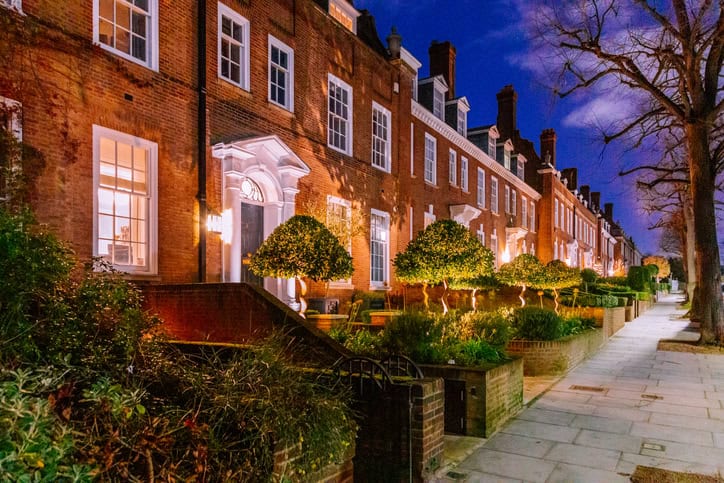
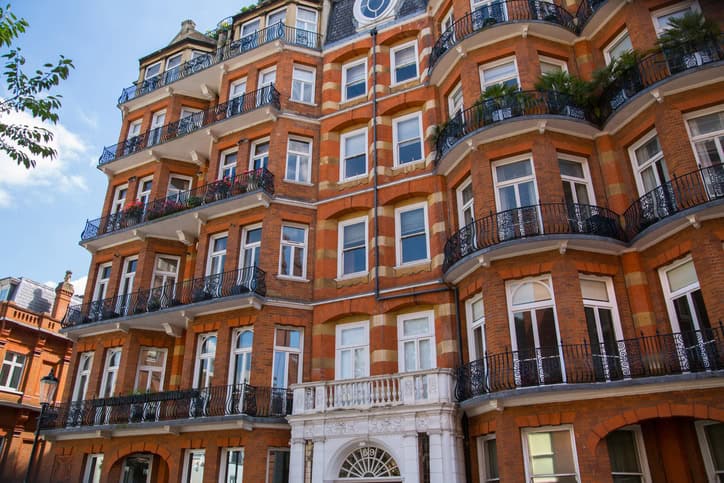
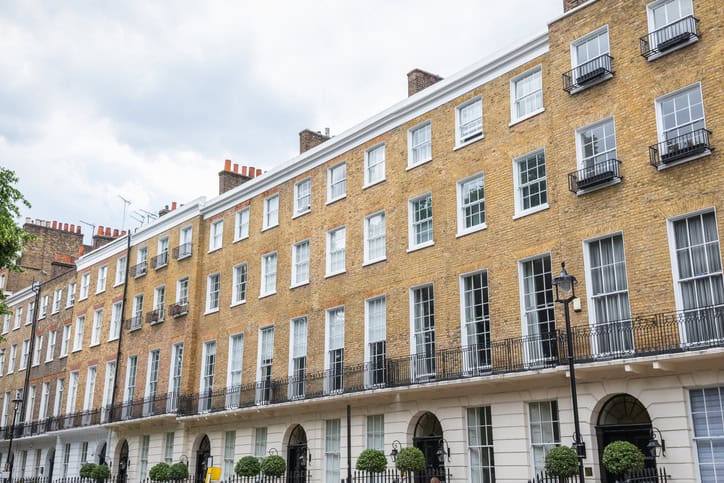
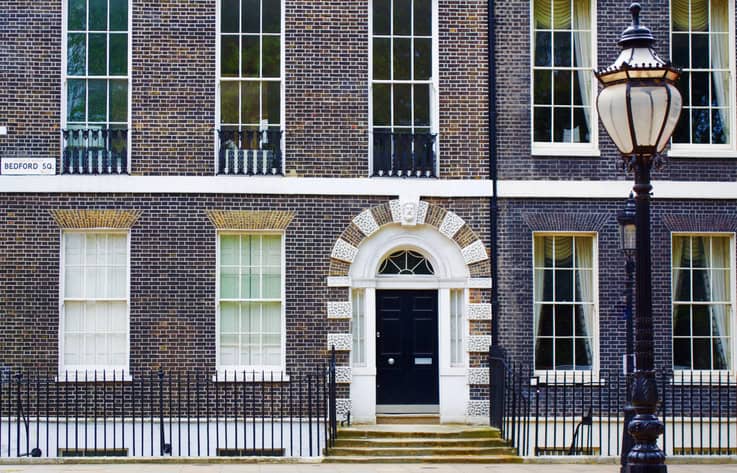
You’ll find them throughout areas such as Kensington, Chelsea, Notting Hill, Marylebone and Westminster — often Georgian terraces, Victorian townhouses or long stucco-fronted streets where the architecture works as a whole. Their protection is no less serious.
Working on a Grade II listed building usually means navigating the planning system carefully. Obtaining listed building consent can be difficult, particularly in boroughs known for strict conservation oversight such as Westminster, Kensington & Chelsea and Camden.
Many applications struggle not because the design is wrong, but because the proposal hasn’t been framed properly in heritage terms. This is where experience matters. A listed building architect must understand how conservation officers assess planning applications — where flexibility exists, and where it doesn’t.
We have delivered refurbishments and extensions to Grade II listed buildings across London. Layouts can evolve, but significant elements must be respected. Staircases, cornicing, fireplaces and structural walls form part of the building’s identity.
Our lead architect, Teddy Laurence, has worked on more than 200 architectural projects, many involving listed buildings.
That experience helps us anticipate common planning issues early and shape proposals to maximise the chances of planning approval and listed building consent.
Areas such as Chelsea, Kensington and Westminster often bring additional scrutiny, but the principles remain the same.
Handled properly, Grade II listed buildings offer something rare — authenticity that cannot be recreated.
the finest Heritage architects in London
As heritage architects London property owners rely on, we view our role as stewardship rather than transformation.
There is a misconception that conservation limits creativity. In reality, it demands a higher level of it. Constraints remove excess. They force clarity. Proportion becomes intentional. Materials are chosen because they belong, not because they trend.
London’s historic fabric is one of its defining strengths. From central districts to outer residential streets, that continuity shapes the city’s identity. Preserving it is not about nostalgia. It is about long-term cultural value.
Every project adds a layer to that story. The question is whether the layer strengthens or weakens what was already there.
We make sure it strengthens.
ARRANGE A FREE CONSULTATION
Arrange a free consultation with a listed building architect firm today, we offer clients a free 30 minute consult.
FREE NO OBLIGATION CONSULTATION
VIRTUAL CONSULTATION AVAILABLE
ON SITE CONSULTATION AVAILABLE
a Specialist Listed Building Architecture in London
Listed buildings are different. They carry restrictions, yes — but more importantly, they carry history. Working within them requires patience, judgement and a clear understanding of how conservation policy actually works in practice. At Payte Architects London, we don’t approach listed projects as standard residential jobs with extra paperwork attached.
The building comes first. Its significance. Its structure. Its long-term integrity. We guide clients through what can feel like a complex process — heritage assessments, listed building consent, conservation conversations — and make it structured, calm and manageable. The goal isn’t just approval. It’s doing the work properly.
Listed Status & Viability Meeting
We begin by understanding the building properly — its listed status, its historic features, and the elements that genuinely matter. Some constraints are firm. Others allow flexibility. That distinction is important early on. These first conversations shape a strategy that is realistic, defensible and grounded in the building itself.
Sensitive Design & Documentation
Design within a listed structure isn’t about dramatic contrast. It’s about careful decisions. We prepare measured drawings, heritage statements and fully justified proposals that explain not just what is changing, but why. If an intervention cannot be clearly defended, it doesn’t proceed.
Planning & Listed Building Consent
Consent processes can feel complicated, particularly across different London boroughs. We manage submissions directly, tailoring each application to local conservation expectations. Small details matter here — phrasing, justification, clarity. Experience reduces friction.
Restoration & Delivery Oversight
Historic fabric demands patience. We work closely with engineers and specialist contractors who understand traditional materials and methods, remaining involved throughout construction to ensure the work respects the building. Done properly, the end result should feel seamless — as though it has always belonged.
listed building architectural services in london
Grade I Listed Buildings
These are buildings of exceptional interest — sometimes considered internationally significant. Only around 2–3% of listed buildings fall into this category. Alterations are highly restricted and require very strong heritage justification.
Grade II* Listed Buildings
Particularly important buildings of more than special interest. This sits between Grade I and Grade II. They represent roughly 5–6% of listed structures and often require detailed conservation input for even modest changes.
Grade II Listed Buildings
The most common classification, covering buildings of special architectural or historic interest. Although more prevalent, they are still fully protected under listed building legislation and require formal consent for alterations affecting character.
Scheduled Monuments
These are nationally important archaeological sites or historic structures protected under separate legislation. They are not technically “listed buildings” but often overlap in heritage-sensitive projects and require Scheduled Monument Consent rather than standard listed building consent.
Locally Listed Buildings
These are buildings identified by a local authority as having heritage value but not nationally listed. They carry fewer statutory protections than Grade I/II/II* buildings but are still material considerations in planning decisions.
Curtilage Listed Buildings
Structures that are not individually listed but are legally protected because they sit within the curtilage (grounds) of a listed building and pre-date 1948. This often includes outbuildings, boundary walls, mews structures, or garden elements.
why work with our
listed building architects?
Deep Heritage Understanding
We don’t approach listed projects as standard refurbishments with added paperwork. Every protected structure has its own logic — historical layers, structural quirks, details that matter more than they first appear. We take the time to understand that properly before proposing change. It avoids problems later.
Realistic Planning Strategy
Listed building consent is rarely straightforward. Different boroughs interpret policy differently. Some are pragmatic. Others are exacting. We shape applications accordingly — grounded, defensible, and aligned with conservation priorities. That preparation reduces friction. And delay.
Design With Restraint
The most successful listed building interventions are often the least obvious. A refined opening. A subtle extension. Improved flow that doesn’t disrupt character. We don’t chase contrast for the sake of it. We look for balance. When new work feels inevitable rather than imposed, you know it’s right.
Protective Oversight
Historic materials require care. Lime plaster behaves differently from modern gypsum. Timber framing tells you where movement has occurred. We remain closely involved during construction, working with contractors who understand traditional methods. Without that oversight, quality slips quickly.

“Listed buildings demand humility. They have stood for generations and will stand long after us. At Payte Architects London, we approach every historic structure with respect, not ego. We see ourselves as custodians — shaping the next chapter carefully, and without excess.”
featured works
examples of our listed building projects

Listed Building Architecture
FAQ
TESTIMONIALS
Read some of our reviews from our happy and valued customers.
Services
Payte Architects London offers a comprehensive suite of architectural services, with our skilled architects specialising in distinct disciplines. This diversity allows us to tailor our approach to meet the various facets of architectural design.